


Master the techniques for photographing fireflies.

Capturing the magical light of the fireflies in photographs is one of the best moments to appreciate the beauty of nature. I was initially unsure how to photograph them, but with experience, I've become able to take beautiful pictures. This time, I'll carefully explain firefly photography techniques, offering methods that are easy even for beginners.
Let's learn the basics of firefly photography.
Because the Japanese firefly (Luciola cruciata) is small and its light is weak, special preparation is required to photograph it. Let's start by looking at the basic equipment and settings.
Camera : A DSLR or mirrorless camera is recommended. You can take pictures with a smartphone if you're creative, but a dedicated camera will definitely produce better results.
Lens : A bright prime lens (F1.8-F2.8) is ideal. Wide-angle lenses can also be used, but brightness is important for capturing light properly.
Tripod : Essential for long exposures. It prevents camera shake and allows for stable shooting.
Remote shutter : This is useful for preventing vibrations when pressing the shutter button.
Adjust your camera settings as follows:
ISO sensitivity: 800-3200 (adjust according to the environment)
Shutter speed: 5 seconds to 30 seconds (adjust according to the amount of light)
Aperture: Wide open (F1.8-F2.8)
Focus: Set manually to infinity (infinity is generally fine, but you can also focus on the desired area).
If you understand these basics, you will be able to capture the light of the fireflies clearly.

How to choose the location and time for shooting
The Japanese firefly (Luciola cruciata) glows most actively on humid, windless nights. Choosing the right location and time for photography is key to success.
Location : Choose a natural area where fireflies (Luciola cruciata) live, such as a wetland or forest. Places with few streetlights or car lights are best.
Time : The light is strongest between 30 minutes and 2 hours after sunset (in some areas, it may be in the middle of the night). Cloudy or humid days after rain are ideal.
It's also a good idea to scout the location before shooting to find a spot with minimal light pollution. Take care to ensure your safety and shoot in a quiet environment.
How to Photograph Fireflies - Practical Techniques -
I will share some tips for actually taking photos, based on my own experience.
Camera installation
Securely mount the camera on a tripod. If using a remote shutter, connect it beforehand.
Focusing
Autofocus is less effective at night, so it's best to manually focus at your shooting location around sunset for a smoother experience.
Adjusting exposure time
Start with a test shot using an exposure time of about 15 seconds. If the light is weak, try extending it to 30 seconds.
Making use of the trails of light
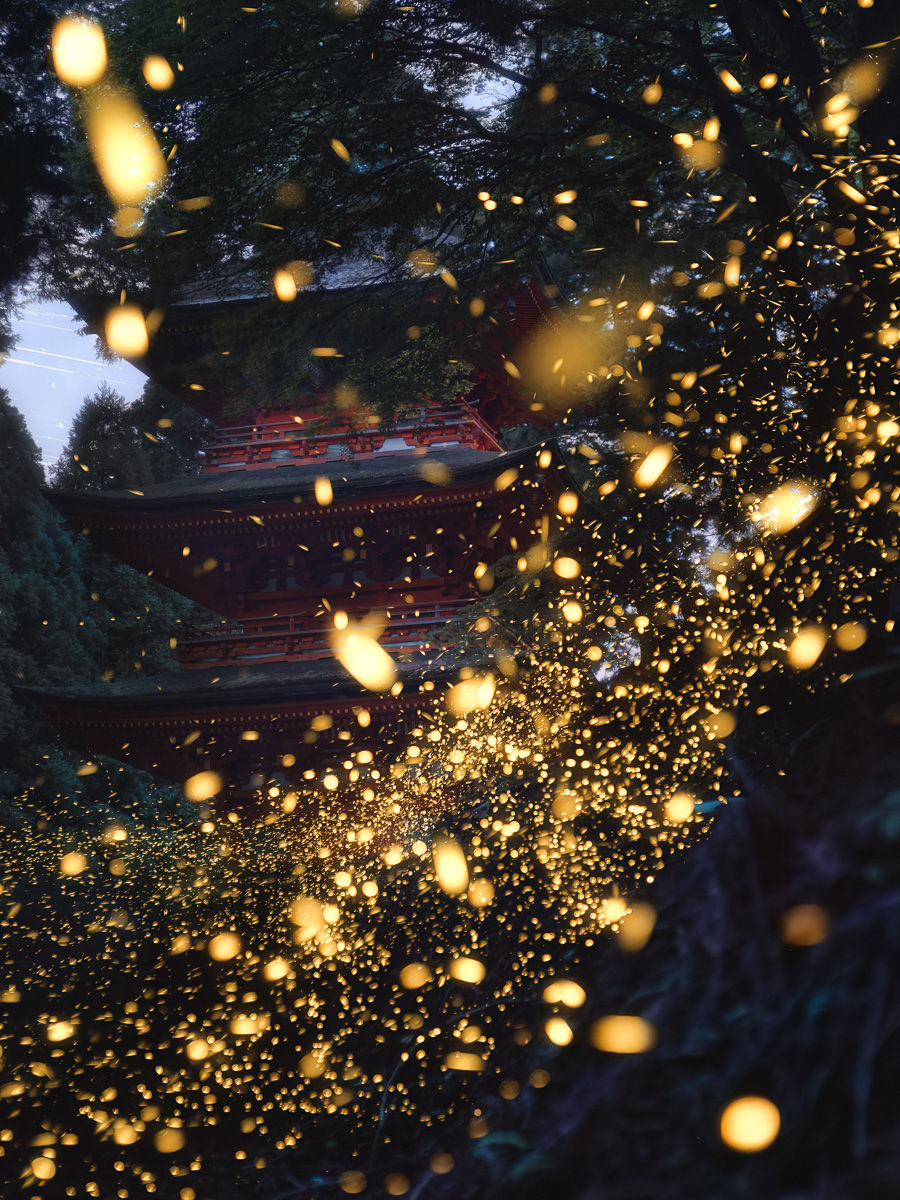
To capture the movement of fireflies, you can take multiple shots and overlap the light trails. Later, you can combine them using image editing software like Photoshop to create a fantastical photograph. With an OM SYSTEM camera, you can use the Live Composite function to instantly create a composite image on-site.
Enjoy ambient sounds
During filming, it's best to remain quiet and enjoy the sounds of nature along with the light of the fireflies.
Tips for editing photos after shooting
Once the photoshoot is complete, let's further enhance the photos through editing. DxO PhotoLab and Adobe Lightroom are easy-to-use editing software. After making basic adjustments with these, perform light-shifting and blending in Adobe Photoshop.
Noise Reduction : Photos taken at high ISO settings tend to have a lot of noise, so use the noise reduction function.
Brightness and contrast adjustment : To make the light of the fireflies stand out, it is effective to increase the highlights and contrast.
Color correction : Adjusts green and blue tones to emphasize the beauty of light while maintaining a natural feel.
The key is to avoid over-editing and preserve the natural beauty. Finally, by layering multiple photos that have undergone basic adjustments in Photoshop and using a light-compression blending technique, you can create a fantastical image of fireflies dancing.
Mindset for enjoying photographing fireflies
Photographing fireflies requires not only skill but also respect for nature and patience. Their light is weak and their movements are unpredictable, so take your time and approach the subject carefully.
Observe proper etiquette : Take your trash with you and avoid touching plants and animals to avoid damaging the natural environment.
Safety first : When shooting in dark places, be careful of your footing and bring insect repellent and a flashlight. (It's best not to use them too often, but don't push yourself too hard as injuries can be serious.)
Share the experience : Publish your photos in online galleries and on social media to convey the beauty of the fireflies to many people.
Through this photoshoot, I was able to experience the mysteries of nature and hone my sensibilities as a photographer. I encourage you all to give it a try.
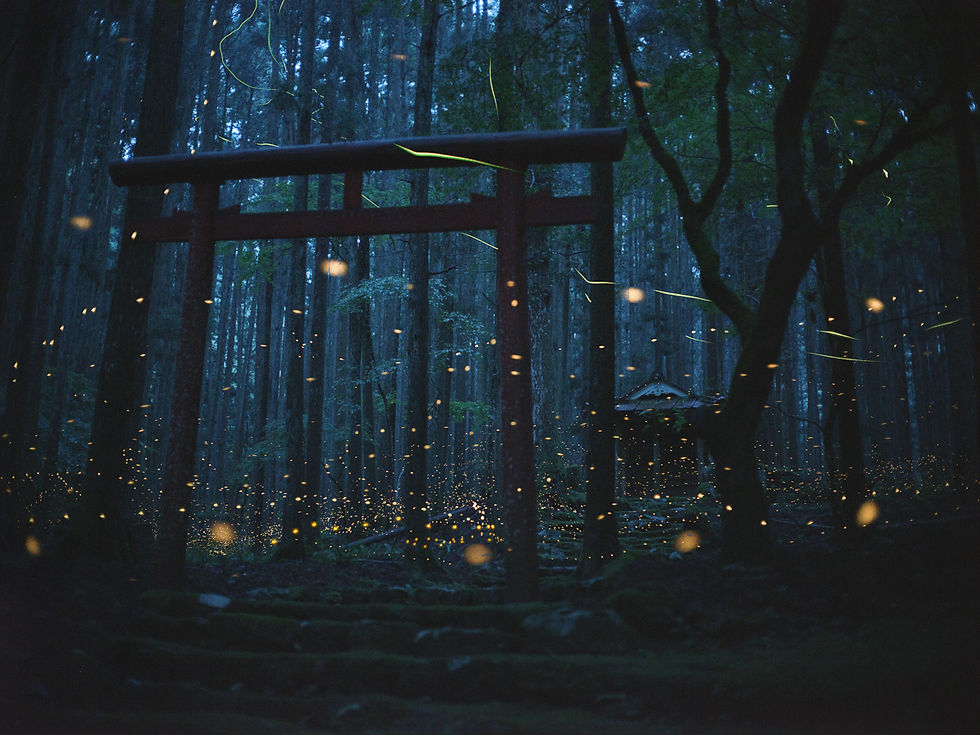
Capturing the light of fireflies in photographs is more than just a photo shoot. Feel the breath of nature, hone your skills, and experience the joy of capturing your emotions. Improve your firefly photography techniques and aim for world-class works!


Comments